
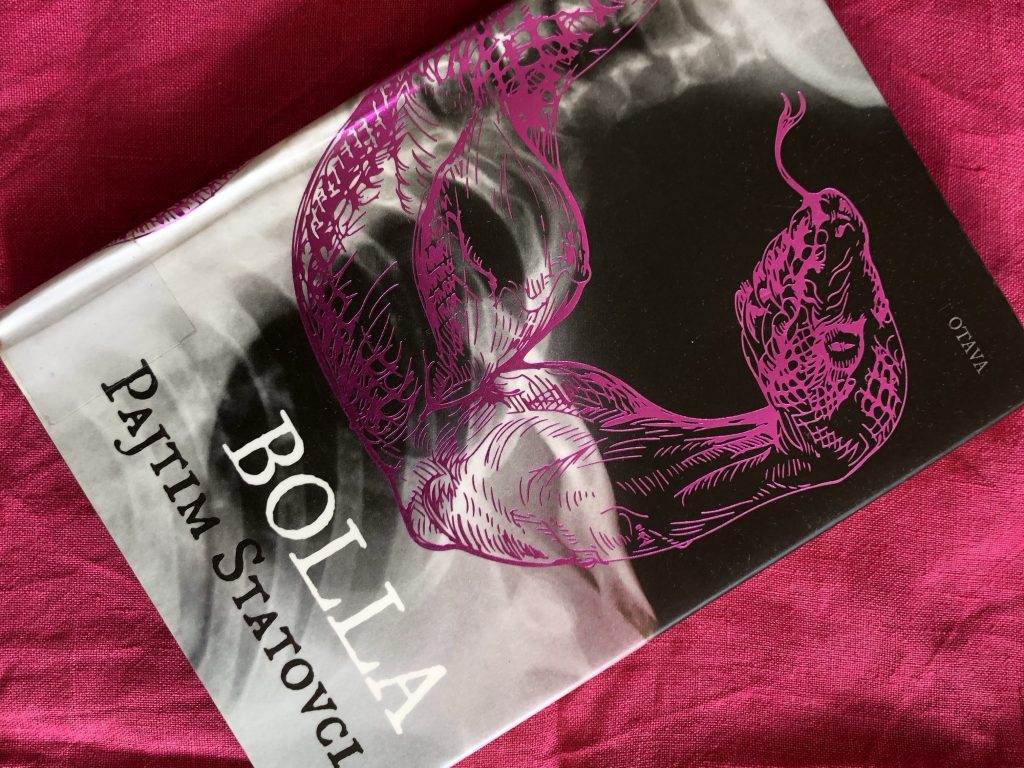
A mythical creature, she rises from the waters to wreak destruction. Snakelike, dragonlike, unlike anything else you hear in fairytales round here. She’s dangerous.
That’s Bolla.
But the book is about two men, who love each other, perhaps. Or at least they did.
Romeo and Romeo, East Side Story, it’d be easy to turn this into a cliché.
But this isn’t Shakespeare, or a musical, it’s a Finnish novel. So the border between fantastical and real isn’t always clear. Nature is a force to be reckoned with. The characters don’t learn and grow in a straight line. And the dark seeps all the way through.
While the proto-serpent from Albanian folklore that gives the book its name, Bolla, is female, this felt a very male book. The wife and mother is that – we don’t get her perspective, though I certainly felt her reasons for rage. And the men rage too, also with reason. There is no way they can display their affection in public. The war in what was, for a while, Yugoslavia, has dragged this Albanian and this Serb in. And for a long time afterwards, even though the family flees to Bulgaria, it doesn’t look likely that they can get out.
Why write about Patjim Statovci’s book now? Because David Hackston’s English translation of Bolla is up for yet another award – any day now, we’ll hear who won the James Tait Black Memorial Prize. The shortlist is fabulous. And I couldn’t sway the judges at this point, they’ve made their decision. But if you haven’t yet, I could sway you to read it.
Spiral down into darkness and see how far you can come back up. Some things can’t be mended. But with others, you might make peace.

Translator, editor, writer, reader


 found in translation
Leave a comment