
The far north is cold, and to survive there, people cling together.
But sometimes social pressure pushes them apart.
That doesn’t stop Priita-Kaisa Seipäjärvi from trying, again and again, to be with the man she loves.
There’s so much more to this trilogy than the love story that holds it together. If you want to really feel what it was like to live right up on the shores of the Arctic, a century or more ago. In those days, up there, people moved around lot. Not only if they were nomadic Sámi reindeer herders, but if they were Norwegian, Finnish or Kven speakers, looking for seasonal work. Fishing, and gutting the fish for sale. Logging, and floating the logs. Farming, too, in the short growing season, but before that, you needed to remove the rocks and make the earth tillable. And build somewhere to live. More than once, if you were challenging the social norms, for instance by living together unmarried. And if you couldn’t make a living where you were, you moved on. Even across another ocean, to start a new life in America.
I was very absorbed by the world of the Songs from the Arctic Ocean trilogy. The daily life, the relationships, how people lived and did things. The protagonist is based on a real person, the author’s great-great-grandmother. There’s a lot of detail here, and a lot of love.
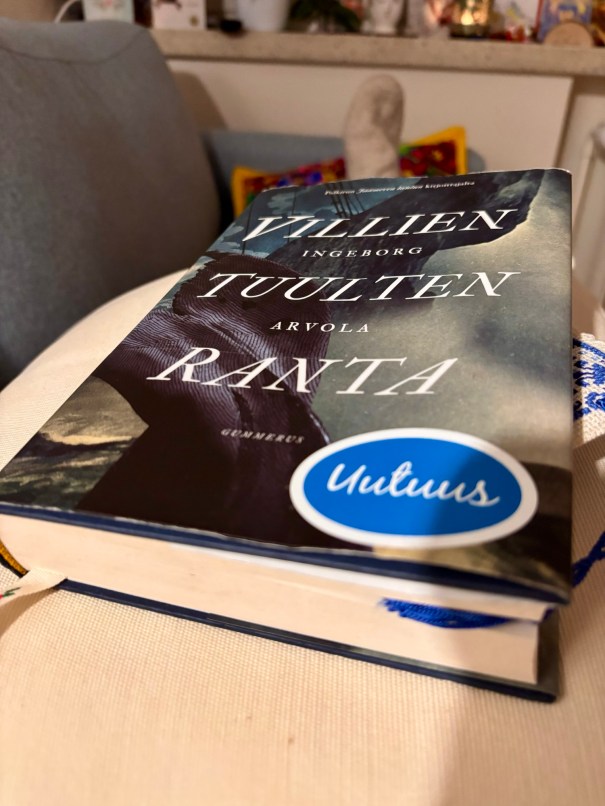
The author Ingeborg Arvola’s father is Finnish and her mother is Norwegian. Her Kniven i ilden (The Knife in the Fire, in Finnish with the series title Jäämeren laulu), won the Brage Prize and nominated for several other awards. Including the Nordic Council Literature Prize, and you can see why; it’s a truly Nordic book. The next two are Vestersand (in Finnish Villien tuulten ranta, coast of the wild winds) and Ulvespor (wolf tracks). I loved volume one and read volume two over Christmas, as soon as I could get it in the queue at the library. Both in Aki Räsänen’s Finnish translation. Now I have to wait for him to translate volume three, to see where the wolf tracks lead.

Translator, editor, writer, reader


 found in translation
Leave a comment