
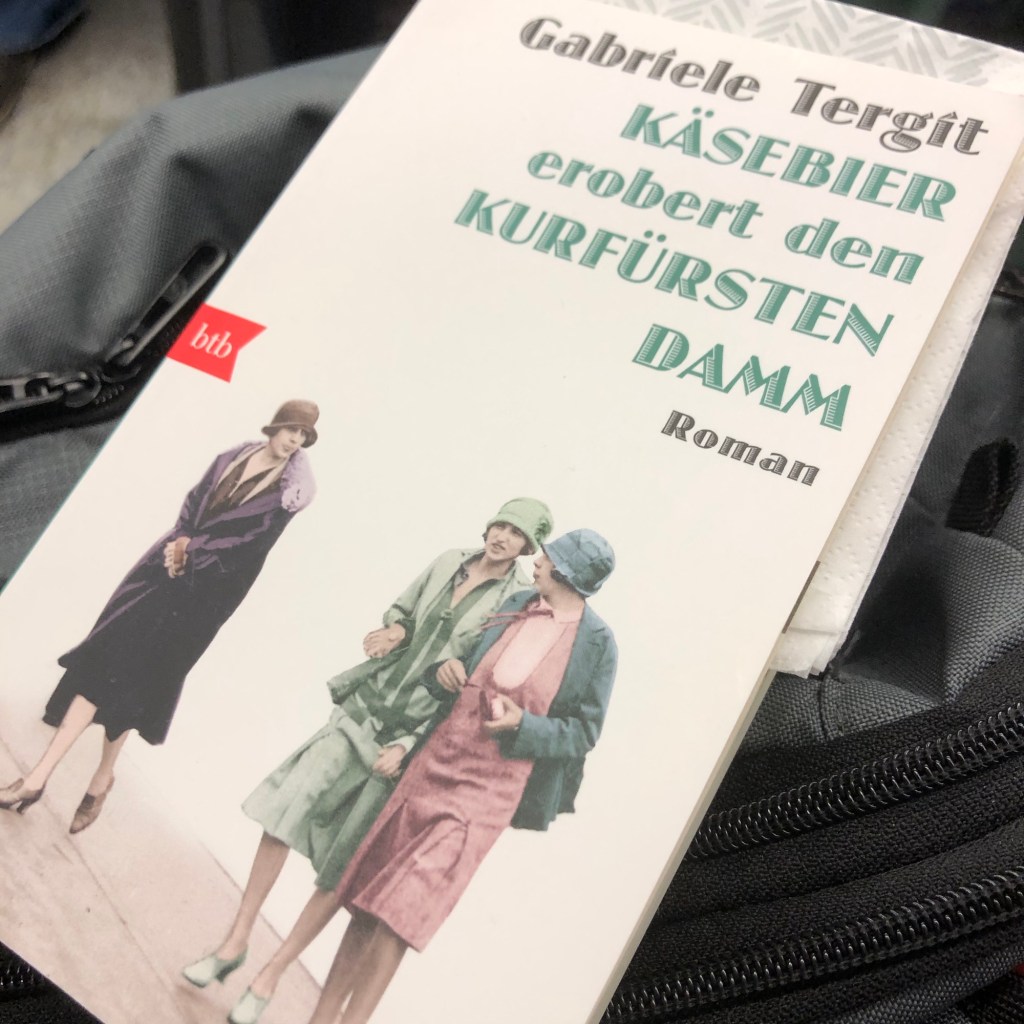
Then we take Berlin…
But for how long?
Gabriele Tergit wrote Käsebier erobert den Kurfürstendamm right after the story unfolded. Berlin in the late 1920s was at its most shimmering, glorious, and frenetic. But pride comes before a fall and by 1930, the depression cut deep. Tergit was living in Berlin herself, as a court reporter, and published her story in 1931, when she and many other German Jews were leaving. The book seared through the rapidly changing reality around her.
But it tells the story of a really rather ordinary man – whose name translates as “Cheese-Beer.” He wasn’t exceptionally goodlooking, he wasn’t an exceptional singer – but he became a huge hit. The press picked him up, and the PR machine steamrolled into action, and a lot of people made a lot of money. Until they didn’t.
While the characters are less important than the city, which is a character itself, the women are sketched best. Like Vicki Baum (Grand Hotel) and others, Tergit is a woman who can see what is going on in society and politics. She knows how to create an atmosphere. Sophie Duvernoy does the same for you in English with her translation, Käsebier Takes Berlin.
If you, like me, wish you’d been there in Berlin in the twenties, this might be as near as you can get. Tergit is a genius with dialogue. She captures the local accent, mannerisms, and details of everyday life like the reporter she is. There are hints of the political meltdown to come, which feel particularly prescient in the twenties of this century. You could read The Passenger next for an equally immersive read into the following decade. Leaving via Czechoslovakia and Palestine, Tergit settled in London, where she wrote her memoirs in the eighties. I will be reading Etwas seletenes überhaupt next.

Translator, editor, writer, reader


 found in translation
[…] Duvernoy, who translated Käsebier takes Berlin, is working on Effingers with funding from the US National Endowment of the Arts. You will have to […]