

The whole world is my home.
That subtitle sums up Weronika Kostyrko’s biography of Róża Luksemburg.
She was the talk of the town. People came up to congratulate her parents in the streets of Warsaw. A woman, with a doctorate! She was only the third one from Poland. But she had to go to Switzerland to get it. And when she did, Poland wasn’t even on the map. Róża kept travelling.
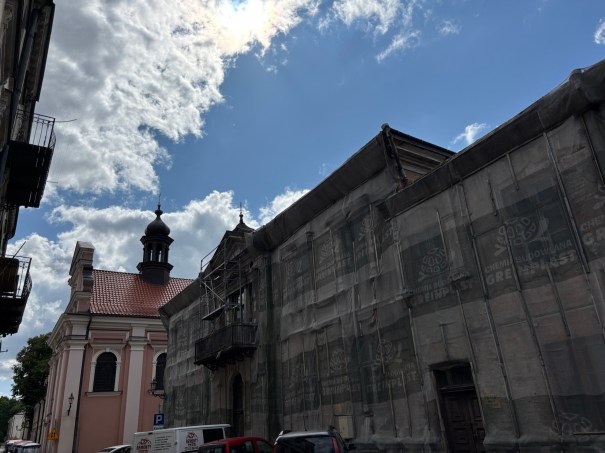

Her legacy is complex. Go to Zamość, where she was born into a Jewish family, and you might struggle to find the house. The plaque was up for a while on the wrong building, until it was taken down. When I went last summer, the building was finally being done up. Go to Berlin, where she lived for many years in between prison stints, and you will find the same. The building from where they took her to murder her and throw her body in the canal is marked – with graffiti of her alongside Karl Liebknecht. As I found this summer, the women’s prison where they held her in Lichtenberg is gone. Only now can you trace its story with an audio tour. Go to Zurich, where she studied… well I haven’t managed that yet. Next summer.
Of course it was only possible to write a more nuanced biography now, after two world wars and a cold one. Kostyrko looks to Hannah Arendt to interpret Róża’s thought: her pacifism, resistance to nationalism, and profound criticism of colonial imperialism. Even though Róża wrote more in German than she did in Polish, reading her letters in Polish brought her much closer.
I hope this version of her story will be translated soon. Marginesy does an amazing job of gathering forgotten stories of women’s lives. They’re worth retelling for a new generation.

Translator, editor, writer, reader


[…] I read for this challenge moved the conversation on themselves. Weronika Kostyrko shows how early Róża Luksemburg held imperial colonialism to account. Valtionaamun aika turns the valtioyö on its head: in it, […]