
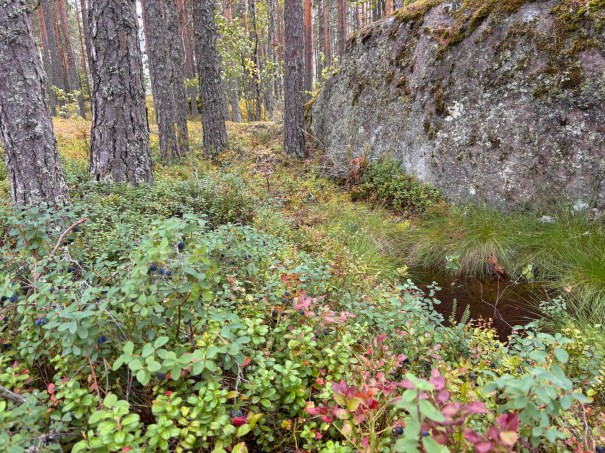
In Finnish, November is marraskuu, the death month. Marras is an old word for dead, that is barely used in any other context now. It comes after lokakuu, the mud month. Very visceral. As October turns to November, it’s all hallows’ eve, Halloween, the day before all saints’ day. But in Finland, it’s also kekri, the turn of the year, when the old year dies. That’s the same in Celtic tradition, but with a different name, so my Welsh soul was glad to read this book. It felt we shared some of the same deep roots.
If you read in Finnish, now is definitely the right time to read this book. The nights are getting darker, everything is dying, the spirits are on the move. As it opens, a strange figure appears on the edge of the forest. The narrator seems to share some language with him, but they have trouble understanding each other. So many words are different, because they have so few shared concepts. Where did he come from, where is he going? Is he a foreigner, a forest spirit or a saint or just a wandering beggar? We find out he’s a twenty-first century archaeologist who’s dug too deep and hurtled centuries back in time.
What I loved about this book though was the perspective. You don’t hear the story through now, but told by a woman who lived then. Valpuri (Walpurgis, whose own wild night is just before the first of May), is the narrator. She’s remembering what happened to her brother Sigfrid, a Dominican friar who, unlike her, can read and write. Maybe his book learning will help her understand what this strange visitor means, and whether she did right by him. So even Valpuri’s story is told at a distance.
Like the liturgy books her brother reads, this novel is black as ebony, white as snow, and blood red. It’s not a fairytale, but myth and folklore are woven right through it. And a strong bond with nature, which we are losing. As the strange arrival says, where I come from, the nights aren’t black enough to see so many stars.
Marras is Liisa Kaski’s first novel. She’s written plenty of nonfiction about folklore, nature and myths, including a guide to reading the Finnish epic, the Kalevala, which won “most beautiful book of the year” in 2015. And after I read and wrote this, she is up for the Helsingin Sanomat debut prize. Maybe this novel will win both awards this year? I hope so. I’d love to translate it!

Translator, editor, writer, reader


Leave a Reply